You are a paralegal who built a routine that turns a messy contract into a clean summary of dates, parties and obligations. Other firms ask for it every week. You want to sell it. You do not want a second job running a shop.
The problem
You priced out doing it yourself. A page to sell from. A way to take payment. A licence so a firm's lawyer will let them use it. A way to ship updates without breaking the version people already run. Refunds when something goes wrong. Someone to answer support email. Tax records.
That is a store, and a store is a business. You wanted to sell one routine, not become a retailer.
You looked at the stores that exist. Most take a cut, sell the file once, and know nothing about what happens after the download. The directories are free to list on and pay nothing. None of them can tell a buyer which version they have or tell you when your routine drove paid work.
Even the catalog built into the tool many routine writers use calls itself a marketplace. Here is how its own documentation describes it.
"A plugin marketplace is a catalog that lets you distribute plugins to others. Marketplaces provide centralized discovery, version tracking, automatic updates, and support for multiple source types, including git repositories and local paths."
Anthropic, Create and distribute a plugin marketplace, Claude Code documentation (2026)
Discovery, versions, updates. Nothing on that page mentions a price, a licence or a receipt. That is the gap you are stuck in.
Why this keeps happening
People search for a claude skills marketplace or a cursor rules marketplace and find lists. A list is not a store. A store is not a marketplace either, once you look at what selling a routine actually needs.
| What selling a routine needs | Do it yourself | General file store | Directory |
|---|---|---|---|
| A page and a stable link | You build it | Yes | Yes |
| Payment | You set it up | Yes, minus a cut | No |
| A licence a business will accept | You write it | Rarely | No |
| Versions buyers can pin | You track it | No | No |
| A record of what the routine uses | You disclose it | No | No |
| A receipt when it drives paid work | Not possible alone | No | No |
| Refunds and support | You | Refunds only | No |
If you have written Claude Code skills, you already have the hard part: a routine that works. Everything in that table is overhead. The overhead is why so many good routines stay in a private folder. It is also why people keep asking how to sell claude skills and get told to zip the file.
Team buyers feel the gap too. As of September 2026, Anthropic's own docs say custom routines do not sync across its products and cannot be handed out across a whole organisation. A firm that wants your routine on ten desks has no vendor path to do it. A stable link to a numbered version is the missing piece.
The cost is not just your time. A routine sold without a licence gets blocked by the buyer's lawyer. A routine sold without versions breaks when you improve it. A routine sold without a list of what it uses gets blamed for a surprise bill. Each of those is a lost buyer who tells other people.
How to fix it
Whether you list on a marketplace or not, do these seven things. They are what a careful buyer will ask for anyway.
- Write the promise in one sentence. "Turns a signed contract into a one-page summary of dates, parties and duties, for small law firms." If you cannot write that sentence, you are not ready to sell.
- Pick a licence. Use only, per team, internal use only, agency use for many clients, or an editable template. Put the licence name in the file too.
- Pick a price, or free. A one-time price, a monthly price for the current version, or free with a share of the paid work it drives.
- List every tool, login and paid service it uses. Truthfully. This list is the first thing a buyer's security person reads.
- Number your versions and never change a released one. Buyers run your routine without watching it. A silent change is a broken Monday for them.
- Put your name and the version inside the file. Copies will travel. Make sure they carry your name.
- Decide who answers support. You, for a fee, or nobody, stated plainly. Silence is the worst answer.
One more thing to know. As of September 2026, Anthropic's docs tell buyers to use routines only from sources they built themselves or got from Anthropic. Read that as the bar you must clear, not a ban. A stranger's routine earns that trust four ways. A verified name, a public file the buyer can read before installing, a truthful list of what it touches, and a receipt per paid call.
Versions matter more on a marketplace than on a code-sharing site, because buyers run routines unattended. This guide to releasing and rolling back AI helpers shows what buyers expect from you.
What BlueBear's marketplace does about it
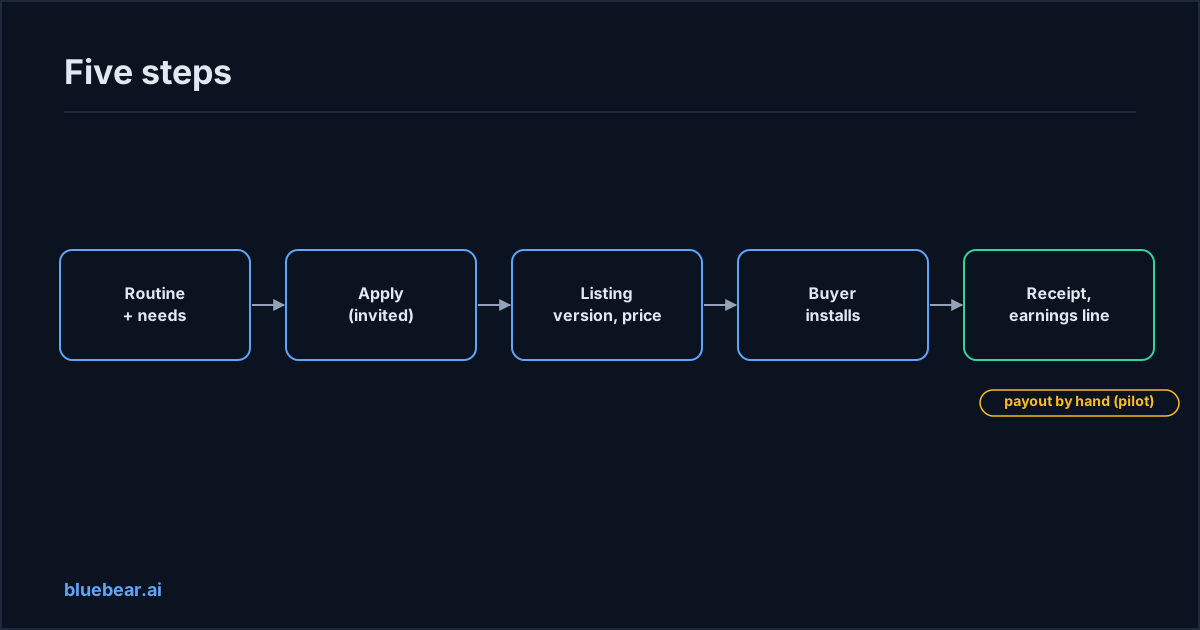
During the pilot, you apply and BlueBear lists the routine for you. There is no store to build. The listing is a public page with a stable link. It shows the promise, your name, the version, the licence, the price in credits (1 credit is $1) or free, and the list of what the routine uses. Your file is served as you wrote it.
The file is public. That is deliberate. A downloaded file cannot be locked, and BlueBear does not promise otherwise. What the listing protects is your name as publisher, the version history, the licence a business must respect, and the receipt trail.
Buyers open the link, read the promise and the price, and install the pinned version. If the routine needs to reach one of their systems, they grant the narrowest access that works. You never see their passwords. During the pilot, a buyer's AI helper can do the same steps without a web page, within the spending rules the buyer set.
Money reaches you two ways. If the routine has a price, the sale creates a payment, a receipt and an earnings line tied to both. If the routine drives paid work, each paid job gets a receipt. That receipt can name your routine or your referral code, and your share is a line tied to it. If a named reviewer rejects a paid result, the buyer is refunded and your line is reversed with a new line. Buyers trust this because the receipt is the same record they keep of what their helper did.
What stays manual or is not built, said plainly.
- Listing is by invitation. A person checks your identity, your right to the content and the truth of your list before anything goes live.
- Payouts are done by hand, on a schedule agreed when you join. No automatic transfers.
- Listings are not sorted or promoted. Your routine is found through your link and your own sharing.
- No tax handling. You report your own income.
- The referral code is optional, and a finer split inside a paid service is not built.
- The routine cannot yet say "any records service" and let the platform pick one. It names the service it needs.
The marketplace is small on purpose. The pilot's job is to prove that an outside creator can list, an unrelated buyer can pay, the receipt is right, and the creator gets paid. Lists of the best claude skills 2026 will come and go; the receipt trail is the part nobody else has built.
What to do next
Bring five things: a link to the routine as it exists today, the one-sentence promise, the licence, the price or "free", and the honest list of what it uses. If you have a needs list, include it. If your routine would benefit from a paid service that does not exist yet, say so; that is useful to know. For a sense of how buyers watch the tool calls your routine makes, this guide shows how those calls are limited and logged on their side.
When you are ready, apply to publish at /marketplace/sell. A person reads every application, and you will be told plainly whether your routine fits now or should wait for a later phase.
Questions people actually search for
- is there a claude skills marketplace that pays creators
Most directories, including Anthropic's plugin lists, do not pay creators as of September 2026. General stores such as PromptBase and Gumroad sell the file and take a cut, with no record of how it is used afterward. BlueBear's marketplace lists a routine with a version, a licence, a price in credits or free, and a receipt trail that names your routine when it drives paid work. It is a pilot: listing is by invitation and payouts are by hand.
- must i run a store to sell an ai routine
No. You can post the file on a general store, which handles payment but nothing else. Or you can list it on a marketplace that publishes it for you. On BlueBear's pilot you bring the file, a one-line promise, a licence, a price and an honest list of what the routine uses. BlueBear sets up the page, the stable link and the version record. You do not build a checkout, a licence page or a refund process.
- is my routine file public when it is listed
Yes. The file is served at a stable address so a person or an AI helper can read what it does before any account exists. This is on purpose. A downloaded file cannot be locked, and BlueBear does not claim otherwise. What the listing protects is your name as the publisher, the version history, the licence a business must respect, and the receipt trail that follows your routine into paid work.
- when do i get paid for a listed ai routine
Earnings are recorded as soon as they happen, as lines tied to a buyer's payment and a receipt. The transfer to you is done by a person during the pilot, on a schedule agreed when you join. There are no automatic transfers and no tax handling yet; you report your own income. If a named reviewer rejects a paid result, the buyer is refunded and your earning line is reversed with a new line, not by editing the old one.