The problem
You run a small agency. You pitch a distributor on an AI agent for order entry. The demo is great. It reads a purchase order and types it into their system in seconds. They buy it.
Then it meets their real orders. It does not know their price list, so it guesses. It does not know one customer always wants split shipments. It needs a login nobody set up. When it gets one wrong, nobody knows until the customer calls.
Now their team feeds it, checks it and fixes it. Three months later they cancel, and tell a friend that AI does not work.
Why this keeps happening
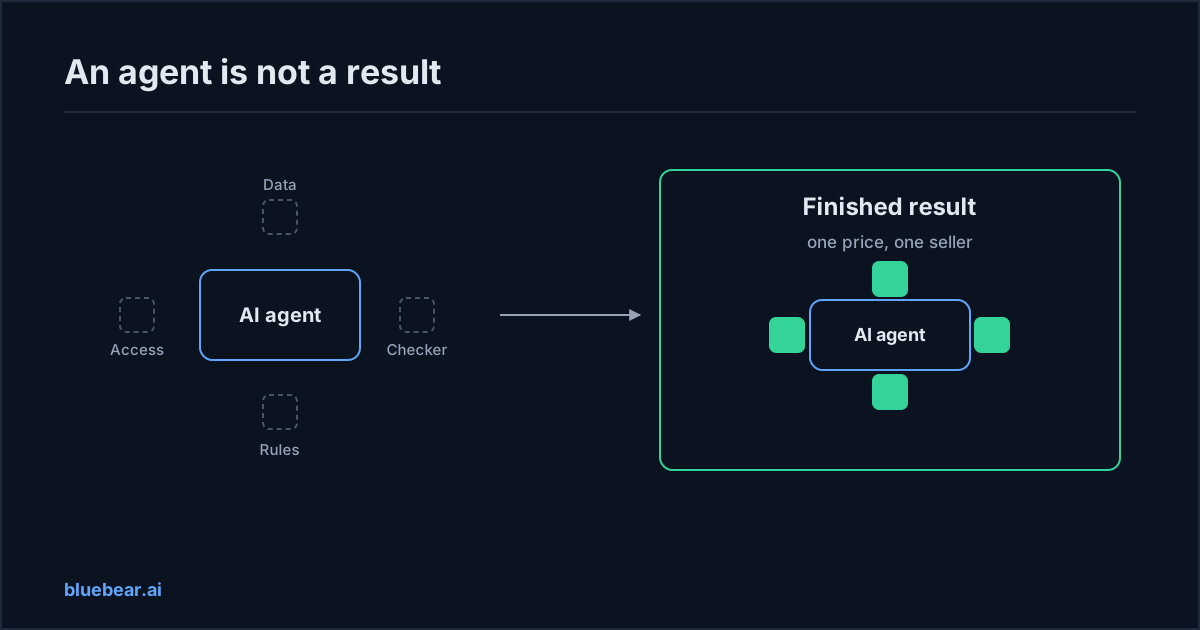
You sold them a worker, not a result. An AI agent is software that follows instructions and uses tools. That is useful. But the result the client wanted needs four more things the agent did not come with.
| What the result needs | Plain example | Who ended up supplying it |
|---|---|---|
| Data it must not guess | The price list and customer terms | The client's team, by hand |
| Rules for their business | Split shipments for one customer | The client's team, after mistakes |
| Safe access to their systems | A login to read stock and enter orders | Their IT person, with a shared password |
| A person for odd cases | Someone who checks the strange orders | Whoever was free |
The client never wanted an agent. They wanted orders entered correctly. Carson Reed, who writes about running AI agencies, puts it bluntly:
"Local Business owners don't actually care about automation. They care about revenue, patients, leads, and booked appointments."
How to fix it
Stop selling the agent. Sell the result, and include everything the result needs. Vendasta's guide to selling AI agents points the same way: one niche and one result.
- Write the result in one sentence. "Every purchase order is entered, checked and ready to ship by 10am."
- Collect the data it must not guess, and say who keeps it current.
- Write down the business rules before you build, not after the first mistake.
- Set up access the client can switch off, never a shared password.
- Decide who checks the odd cases, and how the client will know they were checked.
- Keep a record of every job, so the client can see it worked this week.
- Price the result, not the software. The agent is just the machinery.
Sometimes the right machinery is not an agent at all. A fixed set of steps that runs the same way every time can do the job for less, with fewer surprises. The client does not care which one you use.
Buying a finished result also tends to work better for clients. As of August 2025, Fortune reported an MIT study finding that buying AI from specialists succeeded about 67 percent of the time, while building in-house succeeded about a third as often. When you sell the whole result, you are that specialist.
What BlueBear is building for this
BlueBear handles the delivery parts around the agent today. Each client's tool connections are kept by the platform instead of in a shared password. Workflows can pause for a person to approve a step. Every run leaves a record you can show the client. And it all runs under your brand.
The data and the business rules are still yours to gather. That is the work clients pay you for.
Not open yet: a public listing where businesses can buy your packaged result directly. BlueBear is building it, and it is not live.
What to do next
Take the service you sell most and rewrite its pitch as one sentence about the result. If you cannot, that is the first thing to fix. Then read how to turn that result into one package with one price. If a client asks how to tell whether it is working, proving AI value beyond demos gives them a method.
Want to deliver results under your own brand on BlueBear? Get in touch.
Questions people actually search for
- what is the difference between an ai agent and a finished result
An AI agent is the worker: software that follows instructions and uses tools. A finished result is the job done, such as orders entered correctly by 10am. The result also needs the right data, business rules, safe access and a person for odd cases.
- why do clients cancel ai agent projects
Usually because the agent arrived without the data, rules and access it needed, so the client's own team ended up feeding it and fixing it. The client wanted less work and got a new job. Selling the whole result avoids that.
- what should an ai automation service include
A one-sentence result, the data it needs and who keeps it current, the business rules written down, access the client can switch off, a person for odd cases, a record of every job, and one price for the result.
- do small business owners care about ai automation
Mostly no. They care about what it gets them: more revenue, more booked appointments, fewer hours on busywork. Pitch the result in those terms and treat the AI as the machinery behind it.