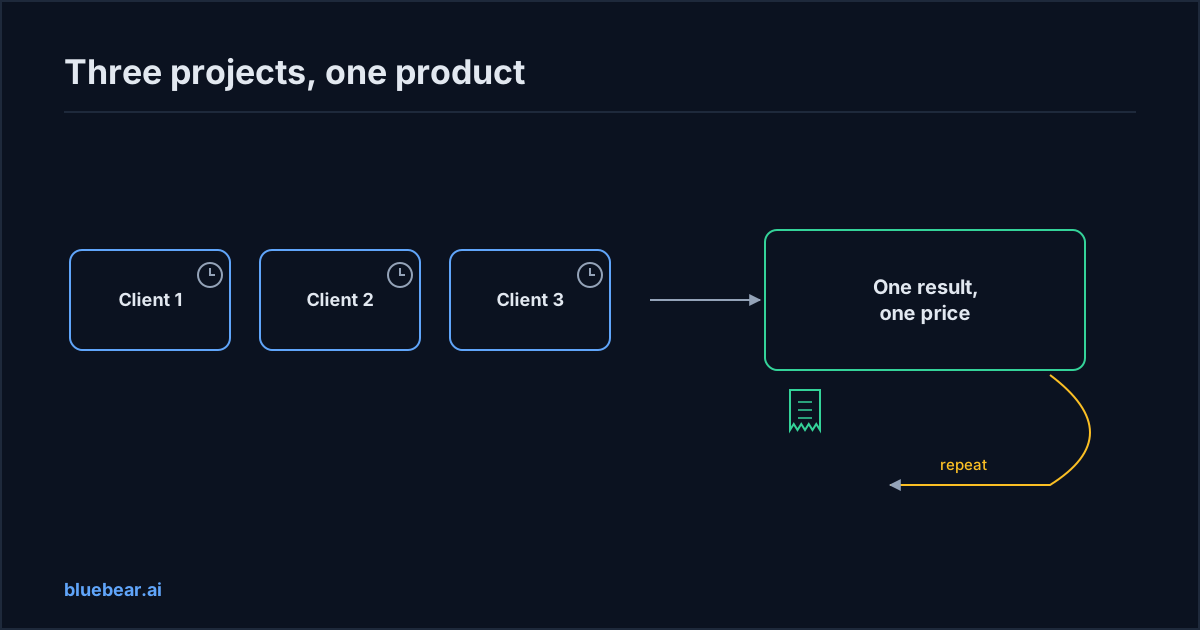
The problem
You run a small AI automation agency. Last spring you built a lead follow-up helper for a roofing company. It worked, and they were happy. Then a plumbing firm asked for the same thing.
You quoted it like a new job, because for you it was one. New scoping call. New setup. New way to bill. New logins to store. Three months later a third company asked. Same story.
You have now done the same job three times and been paid three project fees. Nothing carried over except what you remember. That is the slow way to run an agency.
Why this keeps happening
Custom work does not add up. Each project pays once. And the part that ate your time was rarely the AI. It was everything around it.
| What you rebuild for every client | What it costs you |
|---|---|
| Logins and access to their tools | A setup day, plus a security risk you carry |
| Tracking what each run cost | Margin you cannot see, so you guess |
| Invoices and scope changes | Hours at the end of every month |
| Support | Whoever built it answers the email, forever |
Because those parts live inside each client's setup, the second sale costs nearly as much as the first. The work never gets cheaper to deliver.
It shows up in your margin. As of August 2026, DevShopVault, a guide for agency owners, puts packaged services at 60 to 80 percent gross margin. Custom work sits at 45 to 55 percent. The difference comes from designing the work once and reusing it.
How to fix it
Productizing means turning a job you quote from scratch into one package with a fixed price, a fixed scope and the same delivery steps every time. Start with a job you have already done three times.
- Write down the request in the client's words. "Follow up with every new lead within five minutes." Not a list of features.
- Deliver it once more at your normal fee. This time, list every outside thing it needed: data, logins, rules someone confirmed, and steps a person checked.
- Split that list in two. What repeats for every client goes in the package. What is unique to one client becomes setup work with its own price.
- Fix the scope. Say exactly what is included and what is not. Vague scope is where the margin leaks.
- Set one price for the package. Price the result, not your hours.
- Put it on one page: what it does, what the client must provide, and what it costs.
- Sell it to someone who found the page, not to an old client. Until a stranger buys it, you have a well-documented project, not a product.
Narrow beats broad. As of August 2025, Fortune reported on an MIT study of 300 public AI deployments. Buying from specialists worked about 67 percent of the time. Building in-house worked about a third as often. The lead author explained what the winners did:
"they pick one pain point, execute well, and partner smartly with companies who use their tools"
The DevShopVault guide also lists the mistakes that sink most attempts. Packaging a job before you understand it. Running too many packages at once. Vague scope. No next step to upgrade to. And pricing a monthly package too low, which hurts more every month it runs.
Not sure which job to package first? A paid check of the client's software is often the easiest start. See what an AI agency should sell first.
What BlueBear is building for this
BlueBear takes over the parts you keep rebuilding. Some of that works today, and some is not open yet.
Working today: each client gets their own workspace under your brand. Their tool connections are kept by the platform, not pasted into your code. Every run leaves a record of what happened, so you can answer "did it work this week?" without digging through logs.
Not open yet: a public place to list your package so businesses you have never met can find and buy it. BlueBear is building that, and nobody can buy through it today.
What to do next
Pick the job you have done three times. Write the one sentence a client would pay for. Then work out what one run costs you with this cost-per-workflow worksheet, and read how to price AI work without losing money on small jobs.
Want to run your package under your own brand for your own clients? See how white-label workspaces work for agencies, or talk to us.
Questions people actually search for
- how do you productize an ai automation agency
Pick a job you have already delivered three times. Write the result in one sentence, fix the scope, set one price, and use the same delivery steps for every client. Work that is unique to one client becomes paid setup, not part of the package. Then sell it to someone who has never worked with you.
- what margin does a packaged ai service make
As of August 2026, the agency guide DevShopVault puts packaged services at 60 to 80 percent gross margin, against 45 to 55 percent for custom work. The gain comes from designing the delivery once and reusing it. Your own number depends on how much per-client setup your package still needs.
- which ai agency service should be packaged first
The one you have already built at least three times, with a result a client can describe in one sentence. It helps if it only reads the client's data rather than changing it, and if clients need it again every month. A paid check of a client's software often fits.
- what are common mistakes when productizing ai services
Packaging too early, before you understand the work. Running too many packages at once. Leaving the scope vague. Giving clients no next step to upgrade to. And pricing a monthly package too low, which costs you more every month it runs.