The problem
You run a roofing company across a dozen towns. Tuesday afternoon, you drive past a house two streets from your last job. A competitor's truck is in the driveway. The re-roof permit was filed eleven days ago. It sat on the county website the whole time.
Nobody on your team had time to check twelve permit portals. Your office manager tried for a month. Each site looks different, each one uses its own words for the same work, and nine out of ten permits are for someone else's trade. She gave up around week three, and you do not blame her.
The same story plays out for the HVAC contractor, the solar installer and the property investor watching a neighborhood. The information was public. It was free. You still found out about the big job after your competitor already knocked on the door.
Why this keeps happening
Almost every job you want is announced in a public record first. A homeowner pulls a permit for a re-roof, a furnace, a solar array or an addition. A developer pulls a demolition permit months before framing starts. Cities and counties publish these records, and the US Census Bureau has tracked permit activity nationally for decades.
The records are open by design. The Census Bureau, which counts permits nationally, says so plainly.
"Because building permits are public records, local area data can be published without any confidentiality concerns."
U.S. Census Bureau, About the Building Permits Survey (2026)
The problem is not access. The problem is that every town publishes differently. One posts a daily feed. One updates a monthly file. One has a portal with a search box and no export. Each uses its own permit codes and its own idea of what "issued" means. Reading them all by hand is a part-time job nobody has. As of March 2026, one permit-data company counts more than 20,000 permitting authorities in the US, each with its own format and schedule. And the national figures are no shortcut. As of 2026, the Census Bureau releases its monthly permit counts about twelve working days after the month ends. The town's own website is the fresh source.
So contractors buy lead lists instead. Searches for "building permit leads for contractors" or "permit data leads roofing" turn up resellers. They sell the same list to you and your competitor, often days old. People type "construction lead generation permits" into the search box. The source underneath is always the same county record you could have read yourself.
| Where the delay comes from | What it costs you |
|---|---|
| Twelve portals, twelve formats | Hours of checking, or no checking at all |
| Nine of ten permits are not your trade | Reading time wasted before you find one lead |
| Monthly-batch towns | Leads that are three weeks old when you see them |
| Bought lead lists | The same names sold to your competitor, on the same day |
| No record of when you saw a permit | You call on stale leads and look out of touch |
One more thing to be clear about. AI takeoff software measures and prices a job you already have. It is useful, but it does not tell you the job exists. This article is about the step before that.
How to fix it
You can build a working version of this yourself in an afternoon. Most contractors never do, because nobody owns it. Give it an owner and a half hour on the calendar.
- List the towns you actually want work in. Not every town within driving distance. The eight or twelve where your best jobs come from.
- Find each town's permit page. Many cities post permits on open data sites, and the federal data.gov catalog lists hundreds of them. Bookmark each one.
- Write down the permit types that mean your trade. "Reroof", "roof replacement" and "residential re-roofing" may all be the same thing in three towns. Keep a translation list.
- Book thirty minutes every Monday. One person pulls the new permits since last week and drops the matches into a shared sheet.
- Record two dates for each lead. The date the permit was filed or issued, and the date you saw it. Call the freshest ones first.
- Note the status. "Applied" means the owner is planning. "Issued" means work is about to start. They need different calls.
- Track which leads became jobs. After two months you will know which towns and permit types pay for the half hour.
- When the half hour becomes three hours, pay for the reading. Ask any seller for the list of towns covered, how often each one is checked, and a sample of last week's list.
Two months of this costs you about eight hours. One re-roof pays for it many times over. The habit also teaches you which towns are worth paying for later, and which ones to drop. You will walk into any sales call knowing what a good weekly list looks like, because you have made one.
What BlueBear's marketplace does about it
A permit lead service for contractors and property investors is one of the services BlueBear's marketplace is built to carry. It comes from real requests. Here is what it does for you.
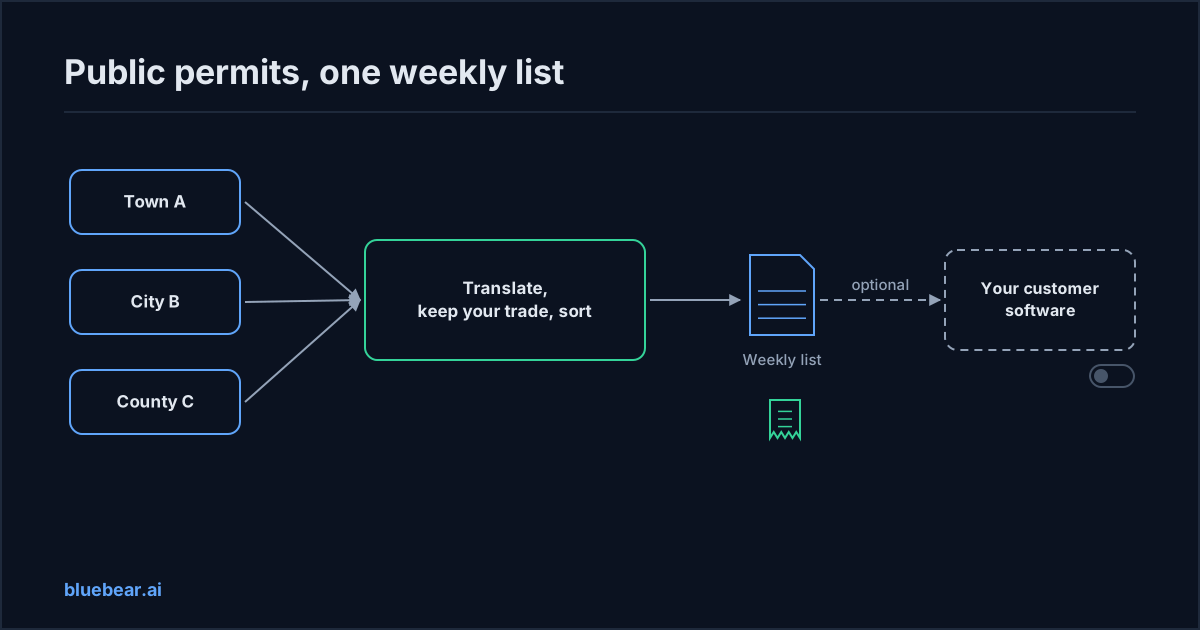
It reads the public permit records for the towns you choose. It translates each town's codes into one plain vocabulary, so a re-roof is a re-roof everywhere. It drops the permits that are not your trade. Then, every week, it hands you one list in the order you asked for: your trade first, issued before applied, biggest declared value first, closest to your yard first. You set those rules and you can read them. There is no hidden score.
Every row shows when the record was last seen at the source. If a town's site was down that week, the list says so instead of quietly repeating last week's rows. That matters, because a lead seen yesterday and a lead from a monthly-batch town are not the same call. Why "seen at" dates matter for any automated list has the longer version for a technical reader.
If you use a CRM (the software where your leads and customers live), you can choose to have new permits added there as lead records. You grant one narrow permission, such as "add a lead", and nothing else. The seller never gets your password and cannot read your customer list. You can switch the permission off yourself at any time. For the first few weeks you can require a person on your team to approve each batch before it lands.
Rows the service cannot sort, such as a permit type it has never seen, go to a short list for a person to look at. The pattern for handling those unsure cases was written for a clinic, but a contractor's office needs the same thing.
You get a receipt for every weekly run. It lists which towns were read, which were unreachable, how many rows came out and what it cost. If a week's list is wrong, you reject it and the charge is refunded against that receipt. Prices are in credits, one credit is one US dollar, and anything that varies is written down before you pay. For example, the shape might be 150 credits a month plus a small charge for any town whose data carries a licensing fee. Those numbers are illustrative.
You can also buy a permit data feed directly and wire it into your CRM yourself. If someone on your team can own that wiring, do it. The marketplace version is for the contractor who wants the weekly list, a receipt and one seller to call, without becoming the owner of the plumbing.
The honest status: this is the kind of service the marketplace is built to carry; publishing is invite-only during the pilot. It is not a listing you can subscribe to this month. BlueBear publishes each offer on the seller's behalf, there is no ranking of sellers, and payments to sellers are handled by hand.
What to do next
Book the Monday half hour this week and run steps one through six for your best three towns. In a month you will know what a weekly list is worth to you. When you are ready to pay someone to do the reading, work through the six things to check before you subscribe. Then visit the public BlueBear marketplace to see what an offer page looks like today.
Questions people actually search for
- are building permit leads for contractors worth paying for
Only if the seller does something you cannot do in half an hour a week. Permit records are public and free. What costs time is reading a dozen town sites, translating their codes, and throwing out the permits that are not your trade. A service earns its fee by doing that reading every week, showing you when each record was last seen, and telling you which towns it could not reach. Ask for last week's list before you pay.
- how old are permit leads when you see them
As old as the slowest town you depend on. Some cities post new permits daily. Others release a file once a month, so a permit can be three weeks old before it appears anywhere. Any list you buy should show two dates for each row: when the permit was filed or issued, and when the record was last seen at the source. Call the freshest ones first, and treat monthly-batch towns as a different kind of lead.
- can new permits go into my crm automatically
Yes, if you choose to switch that on. You grant the service one narrow permission in your CRM, the software where your leads and customers live, such as adding a lead record, and nothing more. It never gets your password and cannot read your customer list. Because adding records has consequences, you can require a person on your team to approve each weekly batch at first. If you cancel, you switch the permission off yourself and access ends that minute.
- what is the difference between applied and issued permits
An applied permit means the owner has asked the town for permission. The job is planned, and they may still be choosing a contractor. An issued permit means the town has approved it and work is about to start, or has started. If a contractor is already named on the record, the job is likely taken. Each stage needs a different call, so a good weekly list shows the stage next to every row.