The problem
It is Thursday night. You have the checkout page open. The demo looked good. The price says $199 a month, plus "usage". The salesperson said setup takes an afternoon. Your finger is over the button, and you realize you do not know what to check first.
You have been here before with other software. The tool that needed a consultant to set up. The subscription you could not cancel without three emails. The "unlimited" plan with a limit. This time the thing will touch your orders, your customers or your patients. You are not sure who answers if it gets one wrong.
You are about to subscribe to something, and nobody has told you what to look for. This article is that list. Six checks, ten minutes, before you press the button.
Why it costs you more than you think
Sellers show you the demo, not the paperwork. The demo runs on their sample data and always works. The paperwork is where the surprises live: what "usage" means, what access they keep, how you leave.
The most common question, "how much do AI agents cost", has no single answer. Most offers mix a fixed fee with a part that moves with your volume. If the moving part has no unit and no cap, your bill is a guess. The second surprise is access. Many tools ask for your password or full access to a system, and keep it after you cancel. The third is silence. When a run goes wrong, there is a form and no name.
Big promises with nothing behind them are not just annoying. Regulators treat them as a legal matter. As of September 2024, the Federal Trade Commission had taken five enforcement actions over misleading AI claims, including against companies selling "AI lawyer" services and AI storefront schemes.
"The FTC's enforcement actions make clear that there is no AI exemption from the laws on the books."
For you, that means a seller who promises results should be able to show them. Ask for the record, not the pitch.
| What you did not check | How it shows up later |
|---|---|
| What "usage" means | A bill three times the sticker price in month two |
| What access you granted | A vendor that can still reach your system after you cancel |
| Who is named on the offer | A support form and nobody accountable when a result is wrong |
| What record each run leaves | No way to answer "why was this order flagged" six months later |
| How you leave | Three emails, a retention call and data you cannot export |
How to fix it
Run these six checks against the offer page and the contract. Write the answers down. If you cannot find an answer, that is your answer.
- The result, in one sentence. What arrives, how often, in what form. "A weekly list of issued permits in our towns." Also ask what it will not do. A good offer names its own limits: it drafts the message but does not send it, it checks the order but does not submit it.
- The total price, and what moves. One fixed number, one unit for the moving part, and a cap you set. A run that would cross the cap should stop and ask. Get the refund rule in writing. As of February 2026, lawyers at Mayer Brown report that most AI contracts still say the service is provided "as is", with all faults. If the offer page does not state a refund rule, assume you have none.
- The trial, on sample data. Old orders, last month's permits, made-up invoices. The trial should produce the same record a live run would. If the trial demands a live connection on day one, walk away.
- How you leave. Three parts: cancelling stops the charge, you can switch off the access yourself, and you can take your records with you. If leaving requires the seller to remove their own access, they held too much.
- Who you call, and how fast. This is what people mean when they search "ai agent sla". An SLA (a service level agreement) is the written promise of how quickly a person responds and what happens if they do not. Also ask where the flagged cases go and who on your side sees them.
- What the record shows. For every run: what was asked, what was read, what came out, what it cost, and who approved anything that left your business. Ask for a sample before you buy.
You will not win a negotiation with a large AI vendor, and you do not have to. Your leverage is the choice between sellers. Pick the one whose page already states the refund rule and the exit.
Write the six answers on one page and keep it with the contract. When the renewal comes around, you will check the same six things again in five minutes. If a seller changes the price, the access or the support terms, the page shows you exactly what moved.
"Who is liable when an AI agent gets it wrong" is the question behind checks five and six. The fair answer for a purchased service has three parts. The seller named on the offer answers for the result. You answer for the decisions your people approve. The record of each run shows which is which. If the offer has no named seller and no record, there is no fair answer.
Sometimes the right move is not to buy at all. "Buy vs build AI agent" deserves thirty seconds of honesty before the six checks.
| Path | Pick it when | What you carry |
|---|---|---|
| Buy a finished service | The job repeats, the result is checkable, and you want someone accountable | Approving the flagged cases |
| Hire a freelancer | The job is one-off or very specific to you | Running what they build. As of September 2026, Fiverr adds a 5.5% buyer fee and Upwork's freelancer fee runs from 0 to 15% |
| Build from a template | You have a technical person with time to maintain it | Everything: hosting, fixes and the records |
What BlueBear's marketplace does about it
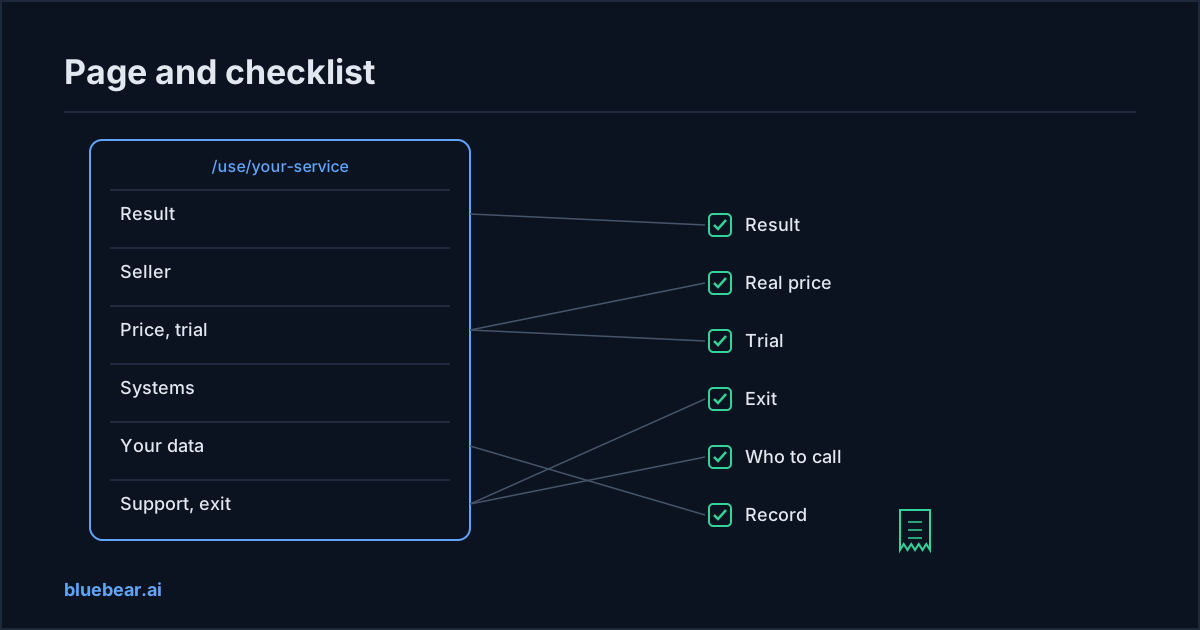
BlueBear's marketplace is built so the six checks are answered on the offer page, before you pay. Every offer has a permanent page, at an address like /use/roofing-lead-system. The page names the result, the seller, the price, the systems it needs, how your data is handled, and how you cancel.
The price is in credits, and one credit is one US dollar. The moving part is written down. You can set a spending limit, and a run that would cross it stops and asks. If you reject a result, the charge is refunded against that run's receipt.
The receipt is the record from check six. It shows what was asked, what was read, what came out, what it cost and who approved any step with consequences outside your business. Larger companies call this an AI agent audit trail. For you it is how you answer a customer, a partner or an auditor months later.
Access is yours to switch off. You grant one narrow permission per service. The seller never gets your password, and your data is not copied into their systems. Cancelling is your action, not a request. Flagged cases wait in a queue for a named person, on your side or the seller's. How that queue should work was written for clinics and applies to any office. If you want a longer readiness check before buying anything, the pilot readiness questions written for healthcare teams fit a small business too.
Now the honest status. The marketplace is a pilot. Publishing is invite-only, and BlueBear publishes each offer on the seller's behalf. The first thing you can buy is a technology readiness check. Software reviews a system, and a named person signs the report. The services described in this series, for medical equipment suppliers and contractors, are the kind of service the marketplace is built to carry. They are not listings you can subscribe to this month. There is no ranking of offers, and payments to sellers are handled by hand.
What to do next
Close the checkout tab tonight. Tomorrow, open the seller's offer page and write down your six answers. If any is blank, ask for it in writing before you pay. When you want to see what a complete offer page looks like, open the public BlueBear marketplace. If you would rather describe the weekly result you want and talk it through first, contact BlueBear.
Questions people actually search for
- how much do ai agents cost a small business
There is no single number, because most offers mix a fixed monthly fee with a part that moves with your volume. What you can insist on is that both parts are written down before you pay, with a unit for the moving part and a cap you set. On BlueBear, prices are in credits, one credit is one US dollar, and a run that would cross your cap stops and asks. Treat any figure without a unit and a cap as unknown.
- what happens to my data if i cancel
Ask this before you buy, in three parts. Does cancelling stop the charge? Can you switch off the access you granted yourself, without waiting for the seller? Can you take your records with you? The right design keeps your data where it already lives, so there is nothing to delete on the seller's side. If the seller says they must remove their own access to your systems, they were holding more than they needed.
- who pays when a purchased ai service gets it wrong
The seller named on the offer answers for the result, and you answer for the decisions your people approve. That is why a named seller matters more than a star count, and why a person on your team signs off on anything that leaves your business. On BlueBear, a result you reject is refunded against the receipt for that run, and the seller sees the rejection. Without a named seller and a record, nobody pays.
- what should an ai service promise about response time
A written promise, not a form. Ask how you reach a person, how fast they respond, and what happens when a case cannot be handled automatically. This is what a service level agreement, or SLA, spells out. Also ask where flagged cases wait and who on your side sees them. A seller who cannot name a response time has not run this for a paying customer yet, and you should not be the first without knowing it.