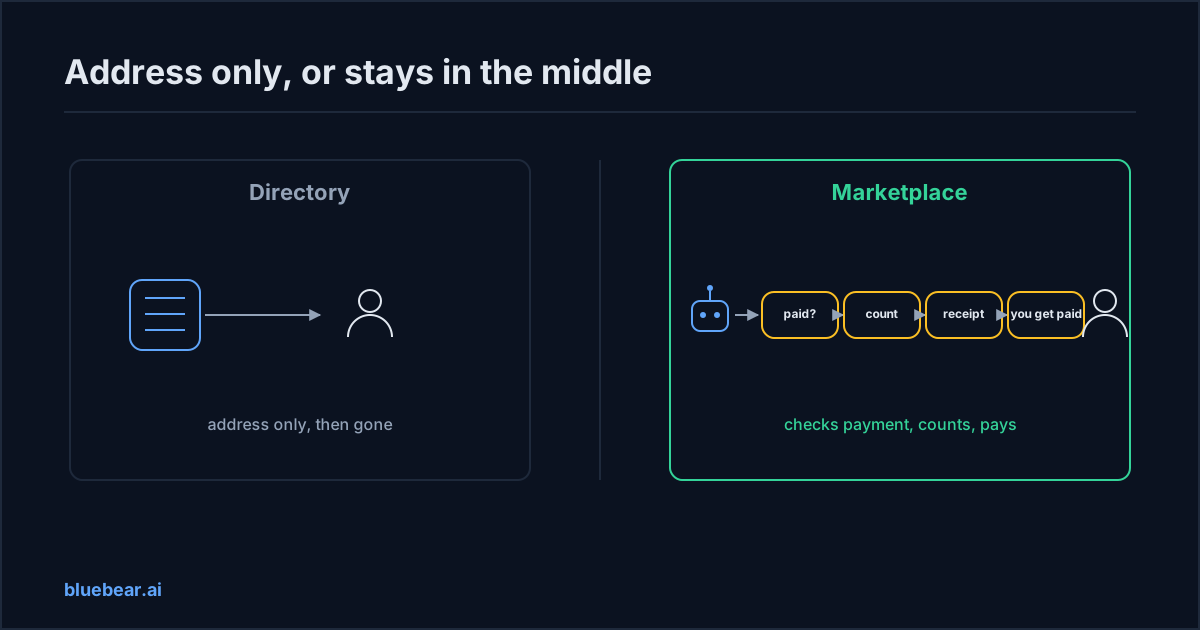
An AI agent marketplace is a place where AI helpers can find your tool, pay for each use, and leave a receipt. A directory only tells them where your tool lives. That one difference decides whether you ever get paid.
The problem
You own a small software business. Your developer built a tool that looks up building permits, checks a price book, or cleans up messy addresses. People like it. Lately the requests have changed. Customers ask, "Can my AI assistant use this?"
So your developer added the plumbing that lets AI helpers connect. Now the traffic is climbing. Your server bill is climbing with it. Your income is not.
You cannot see who is calling. You cannot send anyone a bill. You have a popular product and no way to charge for it. Shut off the free access and the users leave. Keep it open and you pay to serve other people's robots.
You are not alone in this. It is the normal state of almost every tool that AI helpers can reach today. The tools are easy to find and easy to call. Paying for them is the part nobody built.
Why this keeps happening
The places people search for tools like yours were built to list, not to sell. Most are directories for tools that speak MCP, a standard way for AI helpers to use tools. Type "where to find mcp servers" or "what is an mcp registry" into a search box and you land on one. If you have searched "what is an ai agent marketplace" or "mcp marketplace" and got a list of directories, this is why.
A directory is a phone book. It stores your name, a short description and an address. Someone copies the address into their AI helper's settings. From then on the directory is out of the picture. It never sees a single call. It cannot count calls, cannot charge for them and cannot pay you.
The people who run the official registry for these tools say the same thing. The registry lists. Anything above it has to do the judging and the selling.
"Every MCP end-user persona will have different needs, and it is up to the MCP client marketplaces to properly serve their end-users in opinionated ways."
Supply is not the problem either. As of December 2025, Anthropic counted more than 10,000 active public tools that speak this standard. A paid, receipted way to call them is the part still missing.
That is why, as of September 2026, the big public directories such as Glama, Smithery and PulseMCP pay tool makers nothing. They are not being unfair. They were never in a position to pay. For contrast, Apify runs a store where makers charge per event and keep 80 percent of what buyers spend, less platform costs. Getting paid is possible. It needs something standing in the middle of each call.
An app store is closer, but still not right. An "ai agent store" sells finished assistants that a person installs into a chat product. The store owner decides what can be sold at all. Your tool is not an app. It is a service that other people's helpers call, over and over.
Here is what the gap costs you today.
| What happens | What it costs you |
|---|---|
| Helpers call your tool for free | Server and data bills with no income against them |
| You cannot see who calls | No customer list, nobody to call when you launch something new |
| No record of each job | Nothing to point to when someone says the result was wrong |
| No way to switch off one heavy user | You block everyone or you block nobody |
| No price on the page | Buyers cannot budget for you, so they do not |
How to fix it
- Put a number on one use. One lookup, one cleaned record, one check. Write down what it is worth in dollars, even if the number is rough.
- Split free from paid. Keep a sample or a slow version free for the directories. Put the fresh, full version behind a door that checks who is knocking.
- Get a count before you get a bill. Ask your developer how many calls each caller made last month. If nobody knows, that is the first job. Counting comes before charging.
- Decide what a receipt should say. What ran, for whom, at what price, and what came back. Write it as one sentence. This is what settles arguments later.
- Choose where the paid version lives. A capability marketplace is built for this job. It stands in front of your tool, checks that the caller paid, counts each use and sends you the money. If you build that yourself, plan for keys, limits, billing and refunds before the first dollar arrives.
- Keep the directory listings. They bring people to you. Point them at the free sample and at the page where the paid version is sold.
Steps one to four cost you nothing but an afternoon. They also make step five much easier, because you will know what you are selling and what it costs you to serve. Most owners skip them and go straight to "how do I get paid". Then they cannot answer the first question a buyer asks, which is "what does one use cost me?"
What BlueBear's marketplace does about it
BlueBear runs a marketplace where AI helpers can buy the right to use a tool like yours. Here is what that means for you as the owner.
Your tool gets one public page with one price. The same page carries a plain description a computer can read. A buyer's AI helper can understand what you sell without a person opening the page. The listing is stable, so other people's workflows can point at it and keep pointing at it.
A buyer pays in credits. One credit is one US dollar. Their helper can only spend within a limit the buyer set. Every job produces a signed receipt: what ran, for whom, at what price, and what came back. Your earnings are written down from those receipts, one line per job, and the lines are never edited. If a buyer rejects a result, that job is refunded and your line is reversed with a new line.
Some payment companies argue that if each call carries its own payment, nobody needs an account at all. That works for a one-off public call. A business whose helper spends under a budget still needs proof of payment that outlives one call, and a receipt to point at when a result is rejected.
Nobody pastes a password anywhere. The buyer never gets a permanent key to your tool. You never hold the buyer's passwords either. Access can be switched off without anyone touching your code. One accountable seller, one price, one receipt per job.
If your tool promises a judged result, such as a report that a person should check, a named reviewer can sign off before the buyer is charged. The receipt records who signed. That matters to buyers who need to show their own auditors where a result came from.
What is still early. The marketplace is a pilot. Publishing is by invitation, and BlueBear sets up each listing on your behalf. There is no self-serve dashboard and no ranking. Payouts are handled by hand for now. The part where an AI helper connects, searches and buys on its own has been proven during the pilot. It is not yet open to everyone.
What to do next
Ask your developer two questions this week. How many calls did we serve last month, and from how many different callers? If neither number exists, start there. Then write the one-sentence receipt from step four and the price from step one.
For the buyer's side of the story, read the plain-language guide to why buyers now ask for AI-ready tools. If your buyers are larger companies, why they want a curated list of tools explains what they will ask you for. What is an AI agent platform covers the systems their helpers already run on.
When you are ready, read why being listed everywhere still pays nothing, or browse the public marketplace page to see what a finished listing looks like.
Questions people actually search for
- what is an ai agent marketplace in plain words
An AI agent marketplace is a place where AI helpers can find a tool, pay for each use and leave a receipt behind. The owner of the tool sets one price and gets paid when the tool is used. A directory only lists the address of a tool. An app store sells finished assistants that a person installs. A marketplace sits in the middle of each call, so it can check payment, count the use and pay the maker.
- why do directories not pay tool makers
A directory works like a phone book. It stores your name, a description and an address. Someone copies the address into their AI helper and the directory is out of the picture. It never sees a call, so it cannot count calls, charge for them or pay you. As of September 2026 the large public directories, such as Glama, Smithery and PulseMCP, list tools for free and pay their makers nothing. That is what a directory is.
- is an ai agent store the same as a marketplace
No. An ai agent store sells packaged assistants that a person installs into a chat product. The store owner reviews each one and decides whether anything can be sold inside it at all. A marketplace for tools sells the right to call your tool, over and over, from any AI helper. You are paid per use, not per install, and each use has its own receipt. If your product is a service other software calls, the marketplace model fits.
- can ai helpers pay for my tool automatically
Only where a marketplace stands in front of your tool. The buyer puts money into an account and sets a spending limit for their helper. The helper finds your tool, reads the price, and buys access within that limit. Above the limit it stops and asks a person. Each use is counted and receipted, and your earnings are recorded from the receipts. On BlueBear this flow has been proven during the pilot, and payouts to makers are still done by hand.