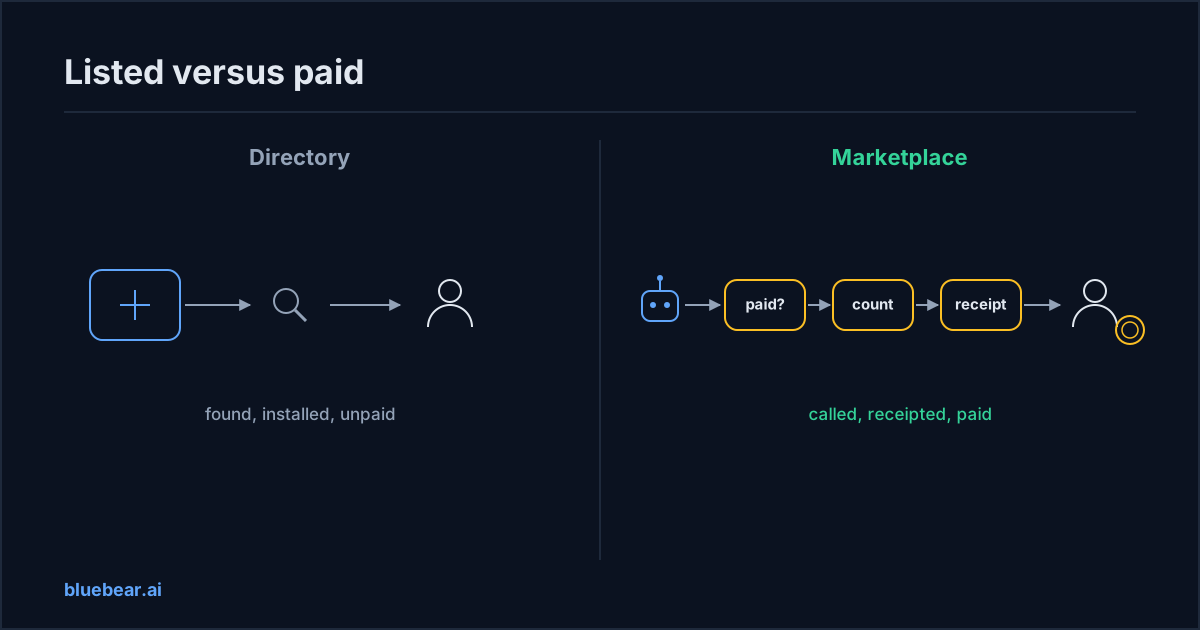
Directories list your tool for free and pay you nothing. Marketplaces sell access to it, decide who may use it, and send you the money. The two are not rivals. You need to know which job each one does before you spend another afternoon on submissions.
The problem
You own a data business. Two years ago your developer built a connector so AI helpers could pull your data. You submitted it everywhere. Glama picked it up on its own. You added it to Smithery, PulseMCP and mcp.so. The listings look great. Installs went up.
Your income from all of it is zero. Your monthly hosting bill is up. The person who watches your budget wants to know why you are paying to serve strangers.
So you searched "where to list your mcp server" and found more directories. You searched "smithery alternative" and found more of the same. You searched "best mcp registries" and "best mcp servers 2026" and got long lists ranked by size. Nobody explained that a listing and a sale are two different things.
Why this keeps happening
Listing sites were built to help people find things. Most of them are directories for tools that speak MCP, a standard way for AI helpers to use tools. A directory is a phone book with a search box. It holds your name, a short description and an address. Once someone copies the address, the directory is out of the picture.
Here is the field as of September 2026. Glama indexes open-source tools on its own, lists more than 84,000 of them, and gives each a letter grade. PulseMCP lists tools and the apps that use them, though its submissions were paused when checked. Smithery hosts tools as well as listing them, and it joined Arcade in August 2026. mcp.so takes submissions through a GitHub issue. None of them pay the people who built the tools.
They are not being unfair. They never see a call, so they cannot count calls, charge for them or pay you. They also do not maintain anything. A listing stays up whether or not the tool behind it still works. That is why every large index carries complaints about dead entries. One independent probe of the official registry in July 2026 found that 1,603 of the 9,326 hosted tools it tested did not answer at all.
The people who run these lists know it. Arcade's chief executive said as much when Smithery joined his company in August 2026.
"While developers have raced to build with MCP, our ToolBench benchmark shows growth has outpaced quality."
Alex Salazar, CEO and co-founder, Arcade, Smithery joins Arcade (August 2026)
A directory cannot fix that for you, because it only records that your tool exists. A receipt for each job records that it worked.
Here is what that costs you. You pay to host every free call. You have no list of who calls, so you cannot sell them anything else. You have no record of any single job, so a complaint is your word against theirs. And you have no price on any page, so buyers cannot budget for you. Most never try.
The other thing people call a marketplace is a cloud vendor's store. AWS Marketplace has a section for AI agents and tools. As of September 2026 its fee on a public software listing is 3 percent, renewals carry 1.5 percent, and container-based listings carry 20 percent. Microsoft runs a similar store for its own products. These do pay. But the buyer is a big company's purchasing team, the unit is a contract, and the seller must be a registered partner. A small tool business is not who they were built for.
Then there is Apify. It runs a store where a maker defines the events they charge for, buyers pay per event, and the maker keeps 80 percent, less platform costs. It shows that per-use pay to a small maker works, when someone sits in the middle of each call.
| Where you can be listed | Who it serves | Pays you per use? | Receipt per job? | Good for |
|---|---|---|---|---|
| Public mcp server directory (Glama, Smithery, PulseMCP, mcp.so) | Developers looking for tools | No | No | Being found; showing up when someone searches your name |
| Cloud vendor store (AWS, Microsoft) | Big-company purchasing teams | Yes, by contract | Contract level only | Selling to accounts that already buy through that cloud |
| Per-event store (Apify) | Buyers of scrapers and automations | Yes | Usage records | Tools with a clear billable event |
| Marketplace built for AI helpers | Businesses whose helpers buy within a set budget | Yes, per receipt | Yes, signed, one per job | Paid, counted, receipted use of your tool |
How to fix it
- Keep the free listings. They cost nothing and they bring people to you. Point each one at a free sample or at your documentation, not at the version you plan to charge for.
- Decide what the paid thing is. Fresher data, the full record instead of a summary, higher volume, or a guaranteed answer. If everything valuable is in free code, there is nothing to sell and no marketplace will change that.
- Put the paid version behind a door. The door checks who is calling and whether they paid. Your developer can build a simple one, or you can use a marketplace that provides it.
- Match the door to your buyer. Large companies that buy through a cloud: use that cloud's store. Small and mid-size businesses and their AI helpers: use a place that counts each use and pays you for it.
- Insist on a receipt per job. If you cannot see who used what, at which version, and what you earned, you cannot settle a dispute and you cannot set a price.
- Stop comparing directories by size. Glama being bigger than Smithery does not change your income. A "smithery vs mcp.so" debate is about hosting and reach, not pay. Compare them by how well your listing shows up for your own name, and move on.
What BlueBear's marketplace does about it
BlueBear's marketplace is not a directory. It will not list your tool for free discovery. It is where the paid version of your tool can live once you have one.
Your tool gets one public page with one price, plus a plain description a computer can read. A buyer's AI helper can find it, read the price and buy access within a budget the buyer set. Buyers pay in credits, and one credit is one US dollar.
Every job produces a signed receipt: what ran, for whom, at what price, and what came back. Your earnings are recorded from those receipts, one line per job, and the lines are never edited. If a buyer rejects a result, the job is refunded and a new line reverses your earning. The buyer never holds a permanent key to your tool, and you never hold theirs.
Some people say the missing piece is not billing but trust: who stands behind each tool, and who is liable when it fails. A receipt that names the publisher and the version is exactly that information, written down for every job.
What is still early. The marketplace is a pilot. Publishing is by invitation, and BlueBear sets up each listing on your behalf. There is no ranking, no self-serve dashboard, and no tax handling. Payouts are done by hand. The part where an AI helper connects and buys on its own has been proven during the pilot, not opened to the public.
What to do next
This week, do steps one and two. Point every free listing at a sample, and write one sentence that says what the paid version gives that the free one does not. Then read how to set a fair price for your tool before you talk to anyone about a door.
If your buyers are large companies, three pieces in the BlueBear library will help. What sits between a buyer's AI helper and your tool explains the door in more detail. What buyers check before connecting anything lists their questions. Why they prefer a curated list to an open index tells you why a directory listing alone will not get you in.
To see what a paid listing looks like, browse the public marketplace page.
Questions people actually search for
- which directories pay the people who list tools
As of September 2026, none of the large public directories do. Glama, Smithery, PulseMCP and mcp.so list tools for free and take no part in payment. Per-use pay to individual makers exists on Apify, where a maker keeps 80 percent of what buyers spend, less platform costs. Cloud marketplaces such as AWS pay sellers by contract with a low fee, but the seller must be a registered partner selling to large accounts. A directory listing is a signpost, not a sale.
- what is the difference between smithery and mcp.so
Smithery can run your tool as well as list it, and it takes submissions through a command-line tool and GitHub. It became part of Arcade in August 2026. mcp.so is a community index where tools are submitted through a GitHub issue. For you as an owner, the practical difference is hosting. For a buyer's AI helper there is no commercial difference at all. Neither one checks payment, counts use or pays you, so smithery vs mcp.so is a question about reach, not income.
- should i keep my tool listed in free directories
Yes. The listings cost nothing, they bring people to you, and they help your tool show up when someone searches for it by name. Point each listing at a free sample or at your documentation, not at the full version you plan to charge for. Keep the paid version behind a door that checks who is calling. Then the directory does the job it is good at, which is being found, and the paid door does the job the directory cannot.
- where can i sell access to my tool
Wherever something sits in the middle of each call. A directory page can link to your sales page, but it never sees the call, so it cannot charge for it. To sell, you need a place that checks payment, counts each use and records a receipt. That could be a per-event store like Apify, a cloud marketplace if your buyers are large companies, or a marketplace built for AI helpers that stands in front of your tool and pays you from receipts.